

Making a Will in Trinidad and Tobago: Legal Requirements and What Happens Without One
Under the Wills and Probate Act, Chapter 9:03 of the Laws of Trinidad and Tobago, a will is only valid if it meets specific formal requirements — regarding who can make one, how it must be signed, and who must witness it. These requirements are strictly enforced. A will that fails any one of them is invalid and cannot be admitted to probate. There is a second, equally important reason to make a proper will in T&T: as of February 2024, the Probate Registry had 14,915 pending probate matters, with the Judiciary acknowledging delays of 6 months to 6 years. A well-drafted, properly executed will handled by an experienced attorney can reduce the risk of your estate becoming part of that backlog.
What Is a Will?
A will is a written legal instrument by which a person — the testator — expresses their wishes about the distribution of their estate after death. The estate comprises all assets the testator owned at death: real property (land and buildings), personal property (vehicles, bank accounts, investments, jewellery, and other possessions), and any debts owed to the testator.
A will only takes effect at death. Until then, it can be changed, revoked, or replaced entirely. Making a will now does not commit you to any particular outcome — it gives you control over what happens to your assets.
Who Can Make a Will in Trinidad and Tobago?
Under the Wills and Probate Act, a testator must be 21 years of age or older to make a valid will. There is no upper age limit. The testator must also have testamentary capacity: they must understand the nature of making a will, the extent of their property, and the claims of those who might reasonably expect to benefit.
A will made by a person who lacked capacity at the time of execution — due to mental illness, dementia, or undue influence — can be challenged in court and declared invalid.
What Are the Formal Requirements for a Valid Will?
The Wills and Probate Act, Chapter 9:03 prescribes the following requirements. All must be satisfied:
| Requirement | What the law requires |
|---|---|
| Age | Testator must be 21 years or older |
| Writing | The will must be in written form — oral wills are not valid in T&T |
| Signature | The testator must sign at the foot or end of the document |
| Signing on behalf | If the testator cannot sign, another person may sign at their direction and in their presence |
| Two witnesses | The signature must be made or acknowledged in the presence of two witnesses present at the same time |
| Witness attestation | Both witnesses must sign in the presence of the testator and of each other |
What Counts as a Signature?
A thumbprint, rubber stamp, or initials can constitute a valid signature where the testator is unable to sign conventionally — for example, where they are blind, illiterate, or physically infirm. What matters is that the mark was intended to authenticate the document as the testator's will.
Are Handwritten (Holographic) Wills Valid in T&T?
No. This is one of the most important differences between T&T law and some other jurisdictions. The Wills and Probate Act, Chapter 9:03 requires two witnesses. A handwritten unwitnessed will — sometimes called a holographic will — is not valid in Trinidad and Tobago, regardless of how clearly it expresses the testator's wishes. If you have seen references to holographic wills from other countries (or from online resources not specific to T&T), those rules do not apply here.
Who Cannot Be a Witness?
A witness to a will cannot be a beneficiary under that will, and cannot be the spouse of a beneficiary. If a beneficiary witnesses the will, the attestation remains valid and the will is not void — but the beneficiary forfeits their gift. They cannot take under the will.
This is one of the most common sources of problems in T&T estate matters: a well-intentioned family member witnesses the will and inadvertently loses their inheritance. Witnesses should always be independent persons with no interest in the estate.
The 2024 Probate Backlog: What It Means for Your Estate
In February 2024, the Judiciary of Trinidad and Tobago publicly acknowledged a severe backlog in the Probate Registry: 14,915 pending probate matters, with processing running at approximately 7 matters per day. At that rate, the implied wait for new applications could extend to several years. The Judiciary has begun implementing an e-Probate digitisation system to address the backlog, but delays of 6 months to 6 years have been reported in practice.
The probate backlog affects estates with a will (probate applications) and estates without a will (letters of administration applications) equally. However, estates with a well-drafted will and a competent, organised executor who files promptly with complete documentation are generally better positioned to move through the process than estates with informal or disputed documents.
Practical steps that reduce probate delays:
- Use an attorney experienced in estate administration to prepare and file the probate application
- Ensure the will names an executor who is willing and able to act — and a substitute executor
- Store the original will safely and tell the executor exactly where it is
- Keep a record of all estate assets and liabilities to assist the executor
What Happens If You Die Without a Will?
If you die without a valid will, you die intestate. Your estate is distributed according to the fixed legal formula in the Succession Act, Chapter 9:02 of the Laws of Trinidad and Tobago — not according to your wishes.
The intestacy rules under the Succession Act and the Distribution of Estates Act 2000:
| Surviving relatives | How the estate is distributed |
|---|---|
| Spouse and children | Spouse takes a statutory share; remainder divided among children equally. The specific proportions depend on the number of children and the value of the estate. |
| Children only (no spouse) | Children share the entire estate equally |
| Spouse only (no children) | Spouse takes the entire estate |
| No spouse, no children | Estate passes to parents; if none, to siblings; if none, to more distant relatives in priority order |
| No surviving relatives at all | Estate passes to the State (bona vacantia) |
Unmarried partners do not inherit under the intestacy rules. A person you lived with for years — who may be entirely financially dependent on you — receives nothing under the Succession Act if you die intestate. Only a valid will can provide for an unmarried partner.
Children from outside the marriage — whether acknowledged or not — may have claims under the intestacy rules depending on their legal status. The Distribution of Estates Act 2000 extended inheritance rights to certain categories of children who would previously have been excluded. This is one of the areas where the law has developed most significantly and where specific legal advice is most important.
The Distribution of Estates Act 2000 introduced provisions that can affect how the estate is divided among surviving family members, and it is important to take current legal advice on how the intestacy rules apply to your specific family situation.
How a Will Can Be Revoked in Trinidad and Tobago
A will can be revoked by:
- Making a new will that expressly revokes the previous one
- A codicil (a supplementary document amending specific provisions)
- Physical destruction of the will by the testator with the intention of revoking it
- Marriage — marriage after the date of the will automatically revokes the will in T&T
Divorce does not automatically revoke a will. However, gifts to a former spouse in an existing will may no longer reflect your wishes after divorce, and the will should be reviewed and updated to reflect changed circumstances.
If you made a will before getting married, make a new one after marriage. If you separated or divorced, review your existing will with a lawyer.
What the Law Says in Trinidad and Tobago
The governing statute is the Wills and Probate Act, Chapter 9:03 of the Laws of Trinidad and Tobago. Section 3 sets out the formal requirements for execution. Section 8 addresses the consequences of a beneficiary acting as a witness. The Act governs both the validity of wills and the probate process.
The intestacy rules — which apply when there is no valid will — are contained in the Succession Act, Chapter 9:02 and the Distribution of Estates Act 2000. These statutes set out the statutory shares of surviving spouses, children, and other relatives.
Both statutes draw from English law (the Wills Act 1837 and subsequent legislation). T&T courts apply English case law on contested questions of execution, capacity, and undue influence where local authority does not exist.
The Probate Registry is located at the Hall of Justice, Port of Spain. It handles grants of probate (for estates with a will) and letters of administration (for intestate estates). Tobago estates are handled through the Scarborough Magistrates' Court.
Digital Assets: What Happens to Your Online Accounts and Cryptocurrency?
No T&T article currently addresses this — but it is an increasingly urgent question. A person who dies in T&T may leave behind:
- Cryptocurrency (Bitcoin, Ethereum, or others) — held in a wallet accessible only by a private key or seed phrase
- Online banking and investment accounts — accessible only by password and two-factor authentication
- Social media accounts — Facebook, Instagram, TikTok
- Domain names, websites, or online businesses
- Digital subscription services with stored payment credentials
Under existing T&T law, digital assets form part of the estate and pass under the will or under the intestacy rules like any other property. The practical problem is access. If no one knows the private key to a cryptocurrency wallet, the asset may be permanently inaccessible regardless of what the will says. If no password records exist, bank accounts and investment platforms will require formal probate documentation and considerable time to access.
What to do in your will:
- Describe your digital assets in a schedule to the will — by type and approximate location (e.g., "cryptocurrency held in a hardware wallet stored at [location]")
- Do not record passwords or private keys in the will itself — wills become public documents on probate
- Instead, store access credentials separately in a secured document (physical or encrypted) and tell your executor where it is
- Consider appointing a digital executor — someone with technical competence to manage and distribute your digital assets
This is a developing area of law globally. At present, T&T courts will apply general property and probate principles to digital assets, but specific guidance on the treatment of cryptocurrency under T&T law is not yet established by decided cases.
Practical Considerations
Update your will when circumstances change. Marriage revokes a prior will in T&T. Divorce does not automatically revoke it. Major changes in assets, the birth of children, or the death of a named beneficiary or executor are all grounds for reviewing and updating.
Choose your executor carefully. The executor is responsible for administering the estate — obtaining probate, collecting assets, paying debts, and distributing to beneficiaries. Name a substitute executor in case your first choice predeceases you or cannot act.
Tell your executor where your will is. A will that cannot be found after death may be treated as revoked. Keep the original in a safe place and ensure your executor knows where it is. Some attorneys hold original wills in safekeeping.
Do not use templates from other jurisdictions. Online will-writing tools are often designed for English or American law. Holographic wills are not valid in T&T. Templates that do not meet the two-witness requirement are worthless here, regardless of how clearly they express your wishes.
Frequently Asked Questions
What are the requirements for a valid will in Trinidad and Tobago?
Under the Wills and Probate Act, Chapter 9:03, a valid will requires: the testator to be 21 or older; the will to be in writing; the testator to sign at the foot or end; and the signature to be made or acknowledged in the presence of two witnesses who are both present at the same time and who then sign in the presence of the testator and each other. All requirements must be satisfied — missing any one of them invalidates the will.
Are handwritten wills without witnesses valid in Trinidad and Tobago?
No. Holographic wills — handwritten and unwitnessed — are not valid in T&T. The Wills and Probate Act requires two witnesses. This is different from some other jurisdictions that recognise holographic wills. Any will made in T&T must comply with the two-witness rule regardless of how clearly it expresses the testator's wishes.
Can a beneficiary witness my will in Trinidad and Tobago?
A beneficiary can witness a will — the will itself is not invalidated. But under Section 8 of the Wills and Probate Act, the beneficiary forfeits their gift. They cannot take under the will. The same rule applies to the spouse of a beneficiary. Always use independent witnesses who have no interest in the estate.
How long does probate take in Trinidad and Tobago?
As of February 2024, the Probate Registry had 14,915 pending matters, with the Judiciary acknowledging delays of 6 months to 6 years. Estates with a properly drafted will, organised executor, and complete documentation filed by an experienced attorney are better positioned. Estates requiring disputes to be resolved, or where the original will cannot be found, face considerably longer delays.
What happens if I die without a will in Trinidad and Tobago?
Your estate is distributed under the Succession Act, Chapter 9:02 intestacy rules. The Act sets fixed shares for surviving spouses, children, and other relatives. Unmarried partners receive nothing under the intestacy rules regardless of the length of the relationship. Only a valid will can provide for an unmarried partner.
Does marriage revoke my existing will?
Yes. Marriage automatically revokes a prior will in Trinidad and Tobago. If you made a will before getting married, you need a new will after marriage. Divorce does not automatically revoke the will, but you should review and update it to reflect changed circumstances.
How much does it cost to make a will in Trinidad and Tobago?
Attorney fees for preparing a straightforward will typically range from approximately TT$1,500 to TT$5,000, depending on complexity and the attorney's experience. More complex arrangements — multiple properties, business interests, trusts for minors — will cost more. Considering that the alternative — intestacy followed by an estate dispute or years in the probate backlog — can cost far more to resolve, professional will-drafting is one of the most cost-effective legal steps a person can take.
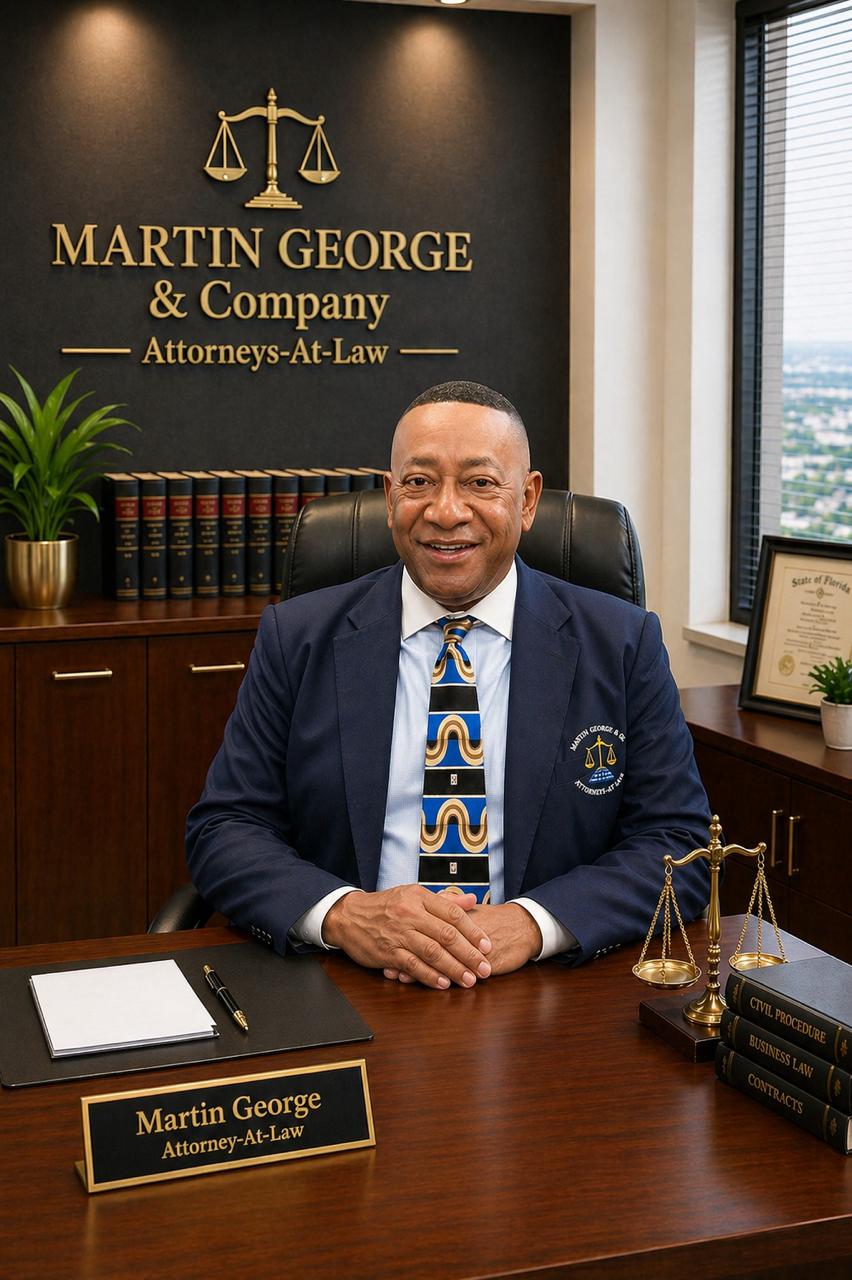
Written by Martin George, Attorney-at-Law. Martin George is the founder and principal attorney of Martin George & Company, with more than 35 years of active legal practice in the courts of Trinidad and Tobago. He is a former Commissioner on the Law Reform Commission of Trinidad and Tobago and a member of the Prime Minister's Constitutional Committee for Internal Self-Government for Tobago. This article is published for general information and public legal education. It does not constitute legal advice. For advice on your specific situation, contact Martin George & Company.
Last reviewed: April 2026