
The Tobago House of Assembly: Autonomy and Constitutional Status in Trinidad and Tobago
Under the law of Trinidad and Tobago, the Tobago House of Assembly (THA) is a statutory body established by the Tobago House of Assembly Act, 1996, exercising powers devolved from the central Parliament over a defined list of matters within Tobago. It is not a sub-sovereign legislature: every power it holds derives from ordinary legislation, and the Constitution of the Republic of Trinidad and Tobago, Chapter 1:01 does not entrench its existence.
What is the Tobago House of Assembly?
The THA is the body of elected representatives responsible for the administration of Tobago. It comprises fifteen elected Assemblymen, four appointed Councillors, a Presiding Officer and a Deputy Presiding Officer. Its political head is the Chief Secretary of Tobago.
The Assembly is not a parallel parliament. It is a deliberative and administrative body whose principal output takes the form of resolutions, policies, and the management of Divisions (the Tobago equivalents of central ministries). Legislation continues to be made for the whole Republic by the Parliament of Trinidad and Tobago.
In practice, the THA functions like a powerful regional government: it controls Divisions for finance, health, education, infrastructure, agriculture, tourism, and community development, and it disburses an annual subvention voted by the central Parliament.
How did the THA come into being?
The modern THA traces back to the Tobago House of Assembly Act, 1980, championed by A.N.R. Robinson. That Act re-established a separate legislative-administrative body for Tobago for the first time since the 1898 union with Trinidad. It was a deliberate response to long-standing Tobagonian arguments that the island's distinct economic, geographic and cultural identity required institutional recognition.
The 1980 Act was repealed and replaced by the Tobago House of Assembly Act, 1996 (Act No. 40 of 1996), which is the current governing statute. The 1996 Act expanded the THA's competence, restructured its committees, and introduced the Fifth Schedule list of matters in respect of which the Assembly has responsibility.
Subsequent amendments have refined funding arrangements, the offices of Chief Secretary and Minority Leader, and election timing. None of these amendments has changed the fundamental constitutional status of the Assembly: it remains a creature of statute that Parliament could, in strict legal theory, repeal or alter by an ordinary majority.
What powers does the THA actually have?
Section 25 of the 1996 Act gives the Assembly responsibility for the formulation and implementation of policy on the matters set out in the Fifth Schedule (commonly called "the Fifth List"). These include:
- State lands in Tobago
- Agriculture, fisheries, food production and marine resources within Tobago
- Tourism within Tobago
- Sports and culture in Tobago
- Town and country planning in Tobago
- Health services and hospitals in Tobago (subject to national policy)
- Infrastructure: roads, bridges, drainage, public buildings within Tobago
- The environment, parks and beaches in Tobago
- Customs and excise (in a limited administrative sense)
- Lotteries and betting in Tobago
- Community development and social welfare in Tobago
Within these areas the THA can make regulations (where empowered by the parent Act), adopt policies, employ a Tobago public service, and operate enterprises. Its budget is debated and approved within the Assembly, but the funds themselves are appropriated by the central Parliament under the annual Appropriation Act.
What the THA cannot do is also important. It cannot make primary law. It cannot levy national taxes. It has no police, no defence force, no external affairs power, and no role in the courts. Citizenship, immigration, and criminal law are entirely central matters under the Immigration Act, Chapter 18:01, the Criminal Procedure Act, Chapter 12:02, and other national statutes.
How does the THA relate to the central government?
The relationship is one of devolved administration within a unitary state. Parliament remains supreme. The Cabinet of Trinidad and Tobago retains policy direction over national matters and, through the budget process, ultimate financial control over Tobago.
Day-to-day, four channels structure the relationship:
- Financial. The Tobago subvention is set annually by central government and disbursed in tranches. The THA cannot borrow on its own account without central approval.
- Policy. Where a Fifth Schedule matter overlaps with a national policy area (for example, public health), national policy prevails and the THA implements within that frame.
- Legal. The Attorney General of Trinidad and Tobago represents the State in any litigation involving the THA. Disputes between the THA and central government, when they arise, are resolved in the courts.
- Political. The Chief Secretary is, by convention, the principal interlocutor with the Prime Minister on Tobago matters.
The friction in this relationship — particularly over funding adequacy and the scope of THA autonomy — has been the principal driver of constitutional reform efforts since the late 1990s.
What is the constitutional motion to entrench the THA?
In 2018 the House of Representatives passed a motion to amend the Constitution of the Republic of Trinidad and Tobago, Chapter 1:01 to entrench the THA and provide for internal self-government. Entrenchment would mean the Assembly's existence and core powers could no longer be altered or abolished by an ordinary parliamentary majority; a special (typically two-thirds or three-fourths) majority would be required, and certain provisions might be subject to referendum.
Two Bills followed that motion: the Constitution (Amendment) (Tobago Self-Government) Bill and the Tobago Island Government Bill. Together they were designed to:
- Insert a new Part into the Constitution recognising the Tobago Island Government
- Create a Tobago Legislature with power to make laws on listed Tobago matters
- Create a Tobago Executive Council headed by a Premier
- Establish a Tobago public service and Tobago revenue arrangements
- Define the boundary between Tobago law-making and national law-making
The Bills did not secure the special majority required for passage in the previous Parliament. They have been re-laid and revised in successive sessions, most recently as part of the 2024–2026 self-government package being considered by the Prime Minister's Constitutional Committee for Internal Self-Government for Tobago.
What did AG v Tobago House of Assembly [2025] UKPC 8 decide?
The Privy Council's decision in AG v Tobago House of Assembly [2025] UKPC 8 is the leading modern authority on the legal nature of the THA and the limits of its competence. In that appeal the Board considered the proper construction of the Tobago House of Assembly Act, 1996 and the constitutional position of the Assembly within the unitary State of Trinidad and Tobago.
The Board's principal holdings, as the author reads them, can be summarised as follows:
- The THA is a statutory body whose powers are conferred, and confined, by the 1996 Act read with the Constitution.
- The Assembly does not enjoy any inherent or residual sovereignty. It cannot lawfully act outside the Fifth Schedule or assert competence over matters reserved to Parliament or the Cabinet.
- Funding obligations of the central government to the THA are governed by the statutory framework and the annual Appropriation Act, not by any free-standing constitutional duty.
- Where the Assembly seeks judicial relief against the central government, ordinary public law principles apply, including those under the Judicial Review Act, Chapter 7:08.
The decision is an important reality check. It clarifies that, until the Constitution is amended, every legitimate complaint that the THA has too little power, or too little money, is a complaint that must be addressed by political and legislative reform, not by judicial expansion of the 1996 Act.
What the Law Says in Trinidad and Tobago
| Source | Citation | What it provides |
|---|---|---|
| Constitution of the Republic of Trinidad and Tobago | Chapter 1:01 | Sole source of sovereign legislative power; Parliament is supreme; THA is not entrenched. |
| Tobago House of Assembly Act, 1996 | Act No. 40 of 1996 (link via Parliament of Trinidad and Tobago) | Establishes the THA, its membership, the Fifth Schedule of matters, and financial arrangements. |
| Judicial Review Act | Chapter 7:08 | Avenue by which THA decisions, or central government decisions affecting Tobago, may be challenged. |
| AG v Tobago House of Assembly | [2025] UKPC 8 | Confirms the THA is a creature of statute, with no inherent sovereignty beyond the 1996 Act. |
| Immigration Act | Chapter 18:01 | Example of a reserved national matter outside THA competence. |
The current legal position, stated plainly, is this: Tobago is governed by a unitary Constitution. Within that framework, an elected Assembly administers a defined list of Tobago matters. Until and unless the Constitution is amended by special majority, the THA's status, powers and funding rest on ordinary legislation that Parliament can vary.
How does the THA compare with the central government?
| Subject matter | Tobago House of Assembly | Central Government / Parliament |
|---|---|---|
| Primary legislation | None — confined to subordinate measures within the 1996 Act | Exclusive: any law for the Republic, including Tobago |
| Constitution and elections | None for national elections; conducts THA elections under THA Act | Exclusive control of national elections, EBC, Constitution |
| Taxation | No power to levy national taxes; limited fees and charges only | Exclusive over income, corporation, VAT, customs, excise |
| Public health | Implementation of national policy in Tobago | Sets national health policy, regulates the profession |
| State lands in Tobago | Administration and management under the Fifth Schedule | Underlying title vests in the State; ultimate disposition national |
| Police, defence, foreign affairs | None | Exclusive |
| Borrowing | Only with central approval | Borrows on behalf of the Republic |
| Judiciary | None | Exclusive — single national Judiciary |
| Budget | Receives annual subvention; debates and allocates internally | Sets, votes and disburses the subvention via Appropriation Act |
What is the Prime Minister's Constitutional Committee for Internal Self-Government for Tobago doing?
The Prime Minister's Constitutional Committee for Internal Self-Government for Tobago is the current vehicle for working through the technical and political detail of the self-government Bills. As a member of that Committee, the author has been engaged in the line-by-line review of the proposed constitutional architecture and the supporting legislation.
The Committee's brief, as the author understands it, includes identifying the matters to be enumerated in a constitutionally entrenched Tobago Schedule, designing a workable funding formula, defining the Tobago Executive (a Premier and Executive Council accountable to a Tobago Legislature), reconciling Tobago law-making with national supremacy on reserved matters, and drafting transitional provisions. Internal self-government requires a special majority in the central Parliament, which in turn requires bipartisan agreement on the scope of Tobago's powers and the protections owed to the rest of the Republic.
What practical issues does this create for citizens and businesses in Tobago?
For the ordinary citizen, some decisions affecting daily life — infrastructure, beach access, agriculture, sport, culture — are taken in Scarborough, while taxation, criminal law, immigration, currency and banking are taken in Port of Spain. Disputes are resolved through the Judiciary of Trinidad and Tobago. For businesses, the recurring issues are land and planning (THA-administered but on State title), licensing overlap with national regulators, procurement under national rules through Tobago Divisions, and litigation in which the Office of the Attorney General appears alongside the THA.
Frequently Asked Questions
Is Tobago a separate country from Trinidad?
No. Tobago is part of the unitary Republic of Trinidad and Tobago under the Constitution of the Republic of Trinidad and Tobago, Chapter 1:01. It has its own elected Assembly with administrative powers, but it shares one Parliament, one Cabinet, one Judiciary and one citizenship with Trinidad.
Can the Tobago House of Assembly make its own laws?
Not in the strict sense. The THA cannot pass primary legislation. Under the Tobago House of Assembly Act, 1996 it can adopt policies, make subsidiary instruments where authorised, and administer Fifth Schedule matters. Primary law for Tobago, as for Trinidad, is made by the Parliament of Trinidad and Tobago.
What is the "Fifth List" or Fifth Schedule?
It is the schedule to the 1996 Act that lists the matters for which the THA has administrative responsibility — including state lands in Tobago, tourism, agriculture, town and country planning, health, infrastructure, sport and culture. Anything not on the list remains a central matter unless and until the Constitution is amended.
Does AG v THA [2025] UKPC 8 stop Tobago from achieving self-government?
No. AG v Tobago House of Assembly [2025] UKPC 8 decides what the law currently is, not what it must always be. The Board confirmed that fuller self-government requires constitutional amendment by Parliament, which is precisely the work in progress through the self-government Bills and the Prime Minister's Constitutional Committee.
What majority is needed to entrench the THA in the Constitution?
A special majority in both Houses of Parliament. The exact threshold depends on which provisions of the Constitution are being altered — some require a two-thirds majority and others a three-fourths majority. Certain amendments may also require a referendum. The drafting choices in the self-government Bills directly affect which threshold applies.
Does the THA control immigration to Tobago?
No. Immigration is exclusively national under the Immigration Act, Chapter 18:01. All entry, residence and work permission for Tobago is granted by the Immigration Division, not by any THA Division.
Can a citizen sue the THA, and how?
Yes. THA decisions are amenable to judicial review under the Judicial Review Act, Chapter 7:08. Ordinary contract, tort and employment claims also lie against the Assembly, with proceedings normally involving the Office of the Attorney General on the State side.
When could full internal self-government for Tobago come into force?
That depends on Parliament. The self-government Bills must be passed by special majority, then commenced by Proclamation, with transitional provisions phased in over time. The Prime Minister's Constitutional Committee for Internal Self-Government for Tobago is actively working towards a final draft suitable for that vote.
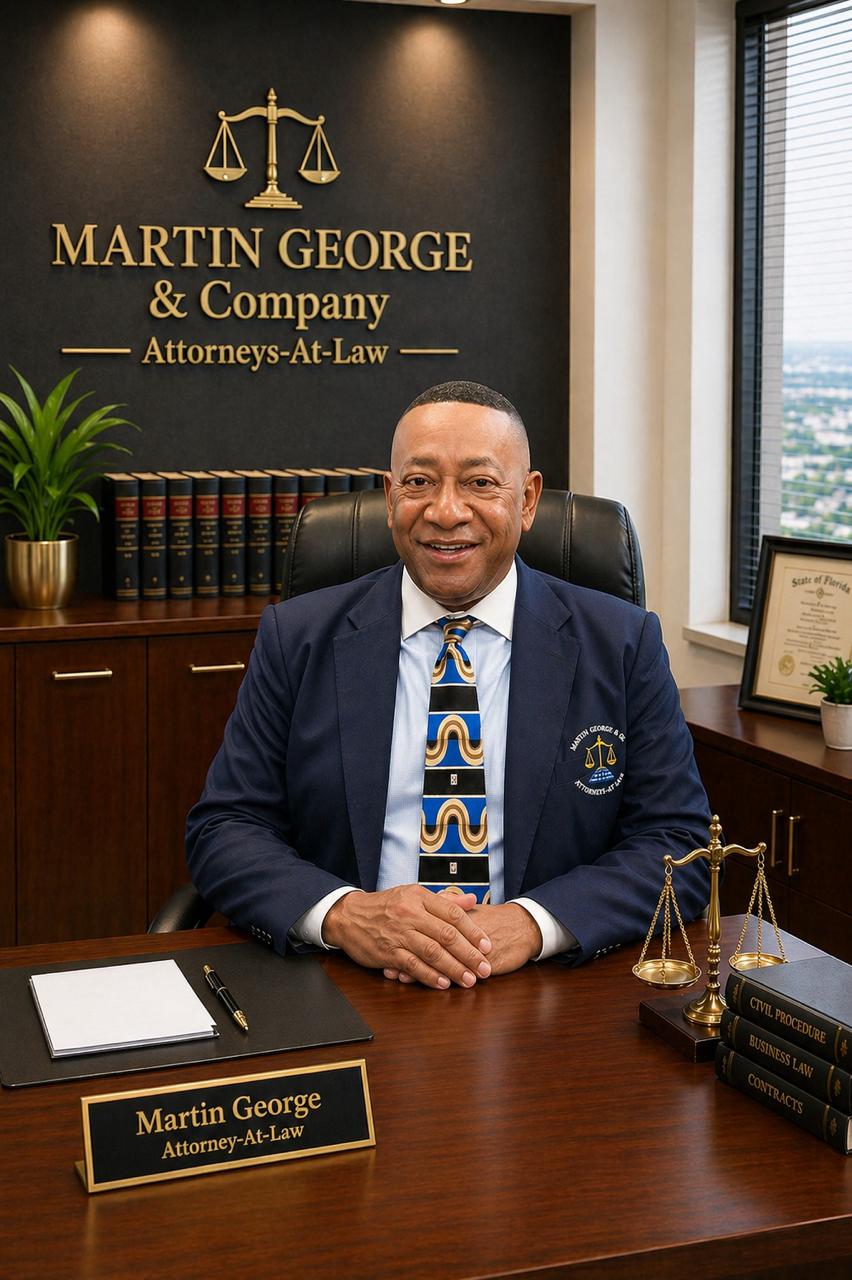
Written by Martin George, Attorney-at-Law. Martin George is the founder and principal attorney of Martin George & Company, with more than 35 years of active legal practice in the courts of Trinidad and Tobago. He is a former Commissioner on the Law Reform Commission of Trinidad and Tobago and a member of the Prime Minister's Constitutional Committee for Internal Self-Government for Tobago. This article is published for general information and public legal education. It does not constitute legal advice. For advice on your specific situation, contact Martin George & Company.
Last reviewed: April 2026